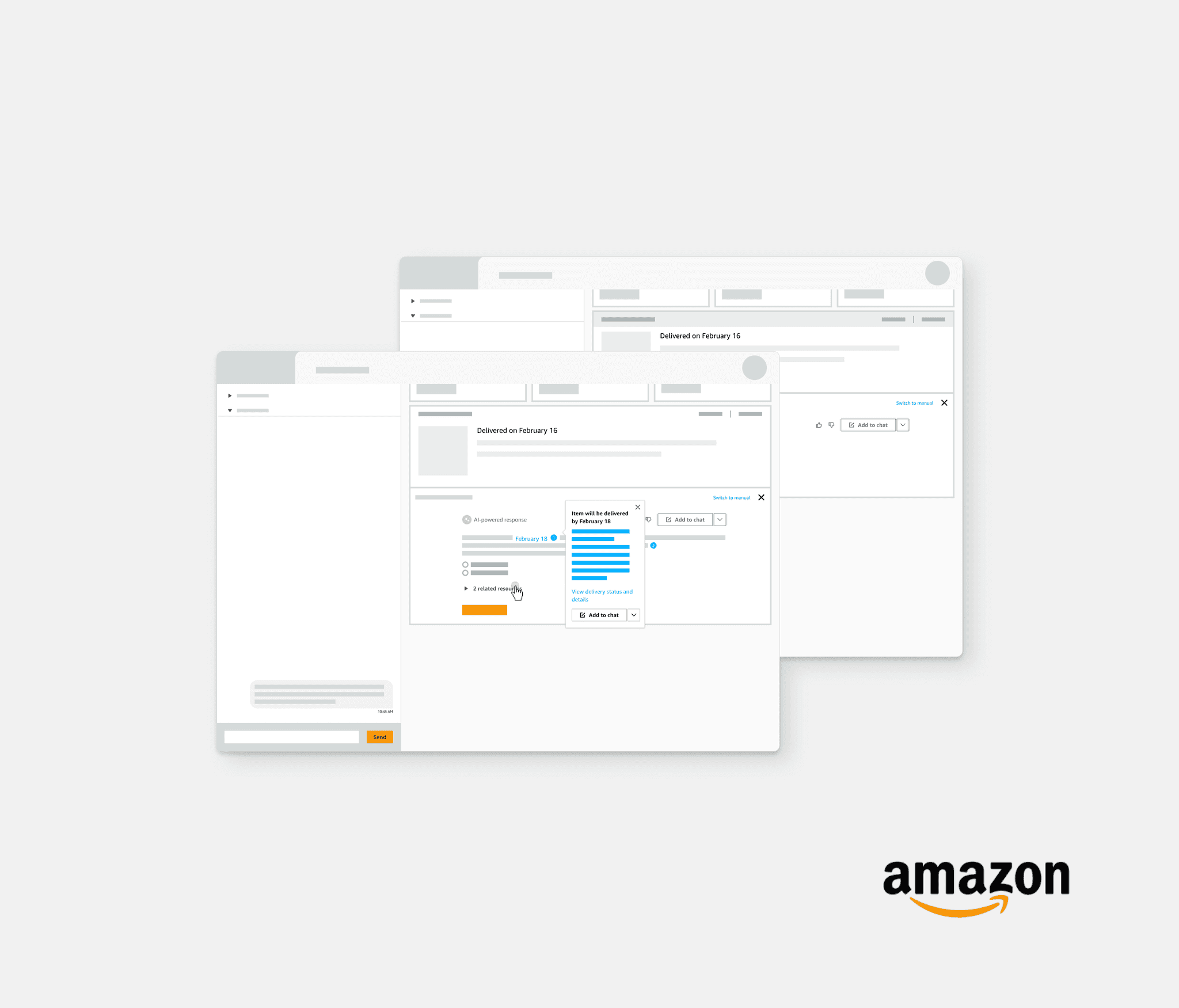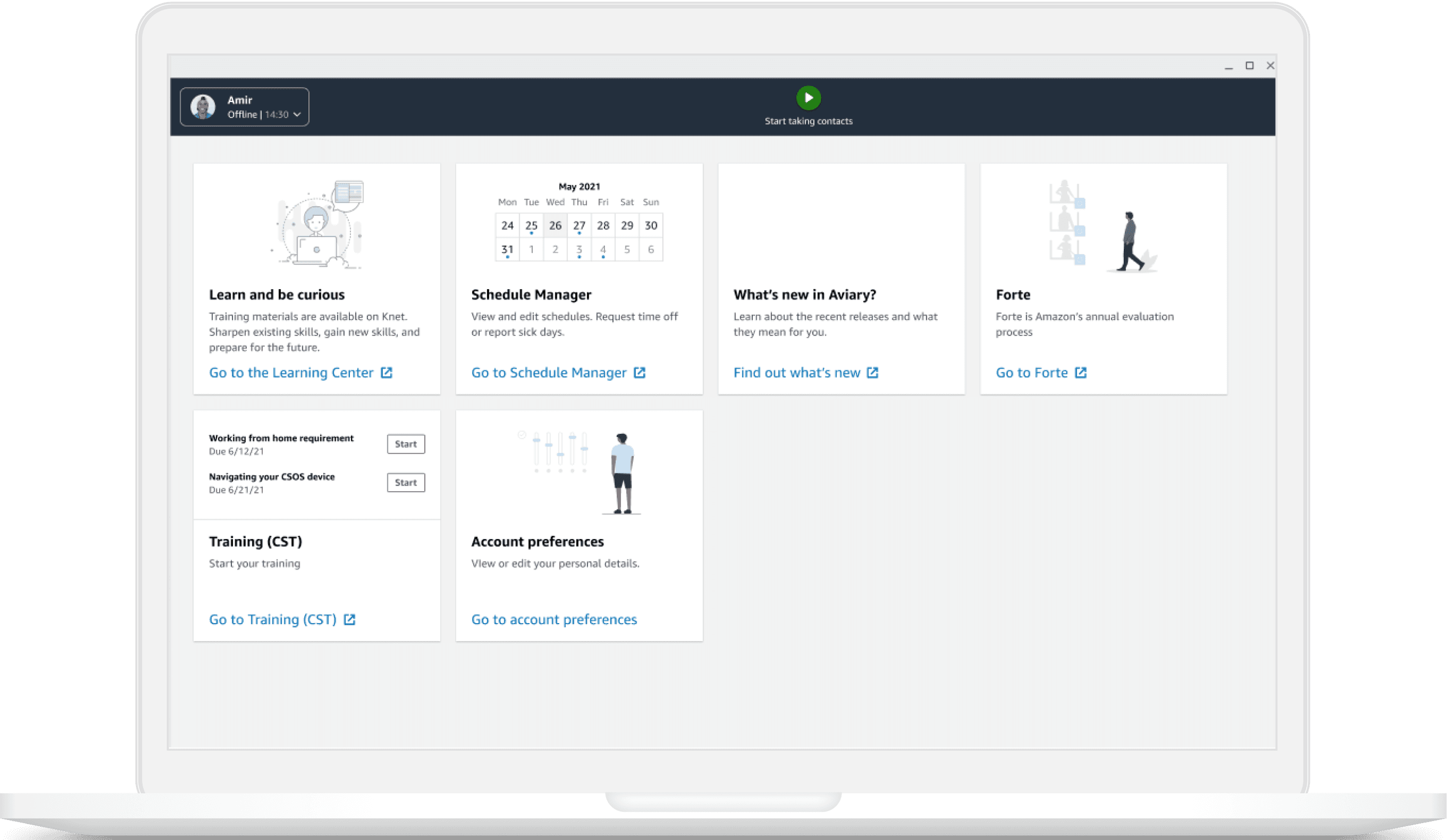
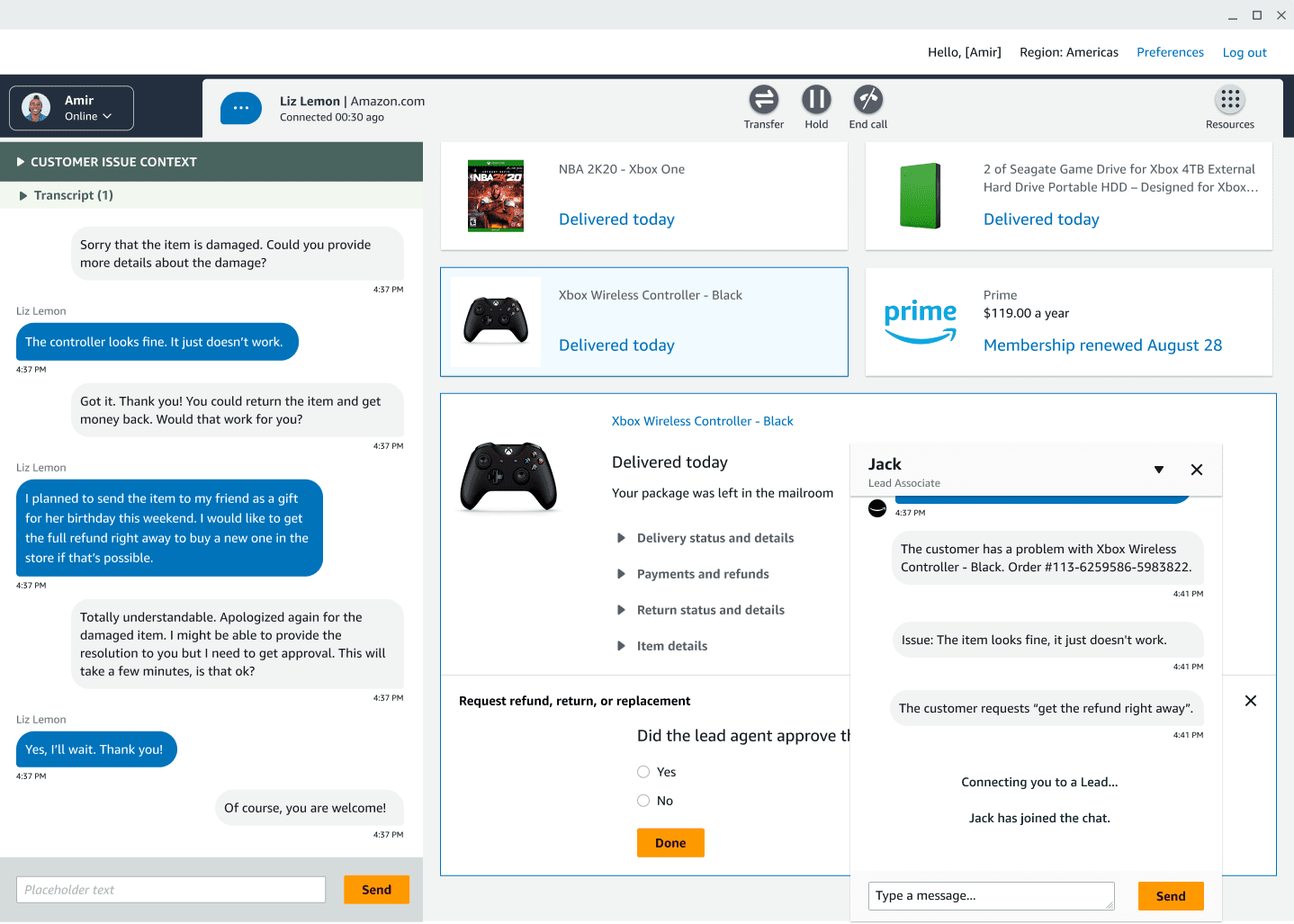
In Amazon customer service center (the original tool where the CS agents handle customer contacts) today, agents have the ability to contact a lead via a platform chat tool that enables a CSA to communicate with a lead agent who can advise on and unblock a customer resolution. Our goal is to migrate the experience to the latest customer service tool in Amazon, Amazon customer care center(AC3).
DEFINING THE PROBLEM
Flow analysis
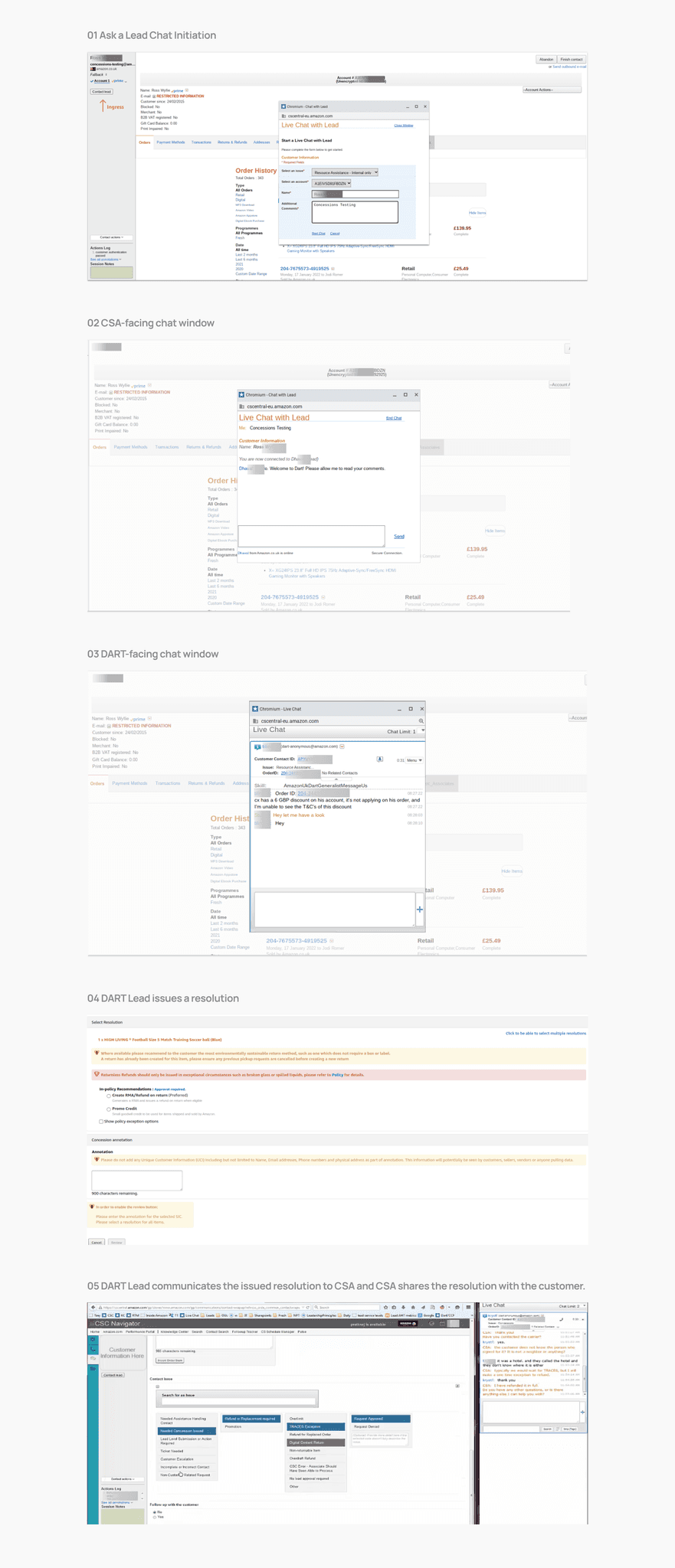
Customer service center
In the past, CS associates can only use the original customer service center to contact a DART Lead. AC3 does not have the feature. The problems in the CSA-DART contact experience in CSC(Customer Service Center)
Some upfront work was needed to understand the opportunity space. I had a design sprint with all the DART stakeholders to understand what experience-related problems are causing them issues in their work. I also looked at the research reports from past lead approval studies to gather customer pain points. From these, I then compiled notes and affinitized them into themes.
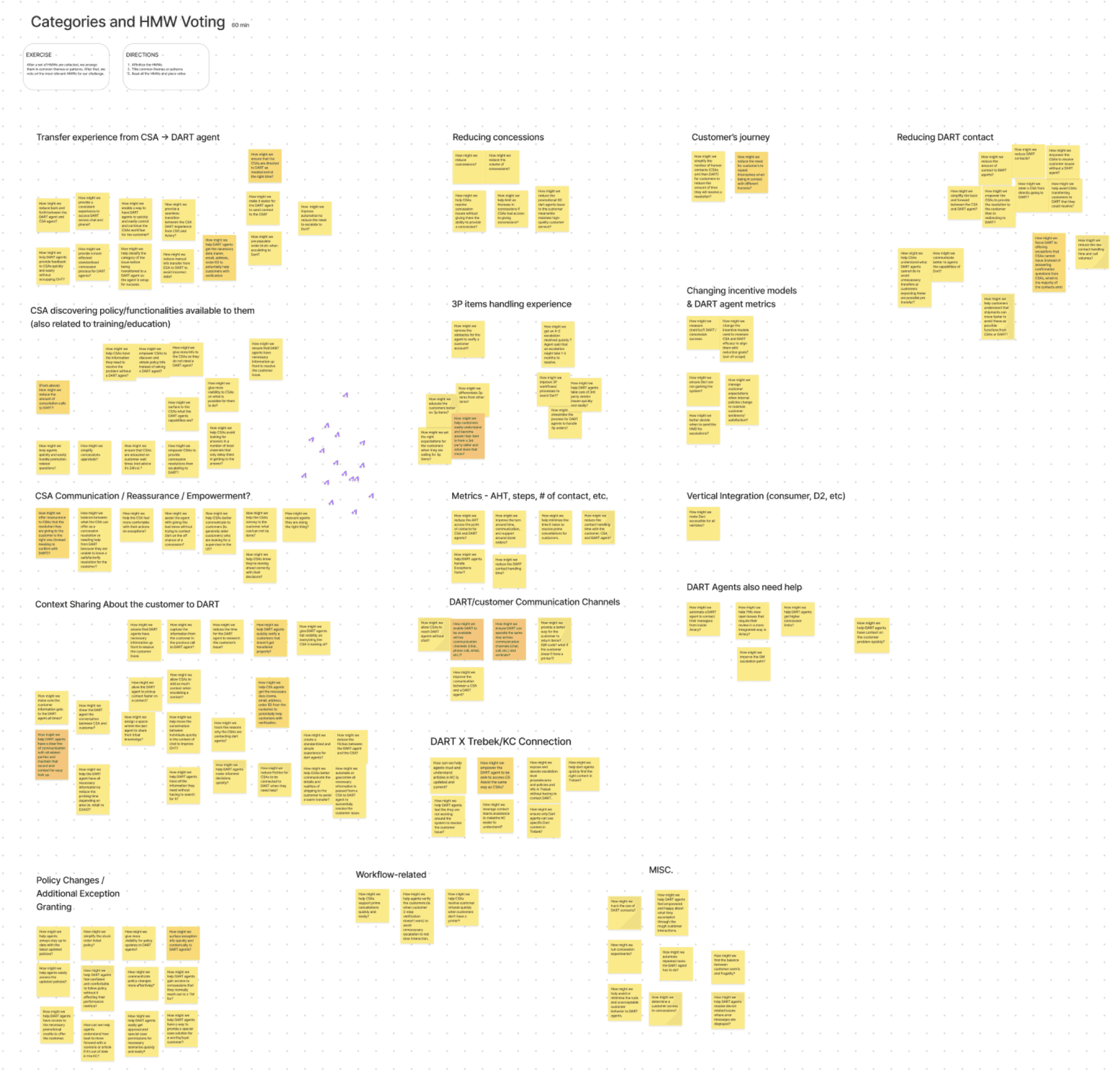
One of the boards where my team voted on top HMWs to help us determine what to focus on in the Design Sprint.
Research themes:
•Transfer experience from the CSA to a DART agent and context sharing about the customer
•CSAs discovering policy and functionalities available to them
•CSAs needing confirmation and reassurance from DART
•Policy changes and additional exception granting
•Reducing the volume of concessions contact
•Third party items handling experience
Problems for CSAs
1. Manual & long contact initiation process
2. CSAs don't have guidance on when to contact DART. A global entry point results in a high contact rate.
Problems for DART Leads
Inadequate context preservation drives longer contact times because DART associates have to clarify info with CSAs.
VISION & OPPORTUNITIES
As we worked on designing an approach to engage Lead approval in a contextual workflow, we recognized the opportunity to design patterns that could span other workflows and verticals.
There are Digital Devices, Shipping and Delivery Support (SDS), and Grocery workspaces where DART Lead design would be used.
As we worked on designing an approach to engage Lead approval in a contextual workflow, we recognized the opportunity to design patterns that could span other workflows and verticals.
Position Lead Associates resolutions in an escalated manner
Provide focus to all the necessary details empowering the CSA to proceed
Pass all the relevant context automatically to Lead agents
SOLUTIONS
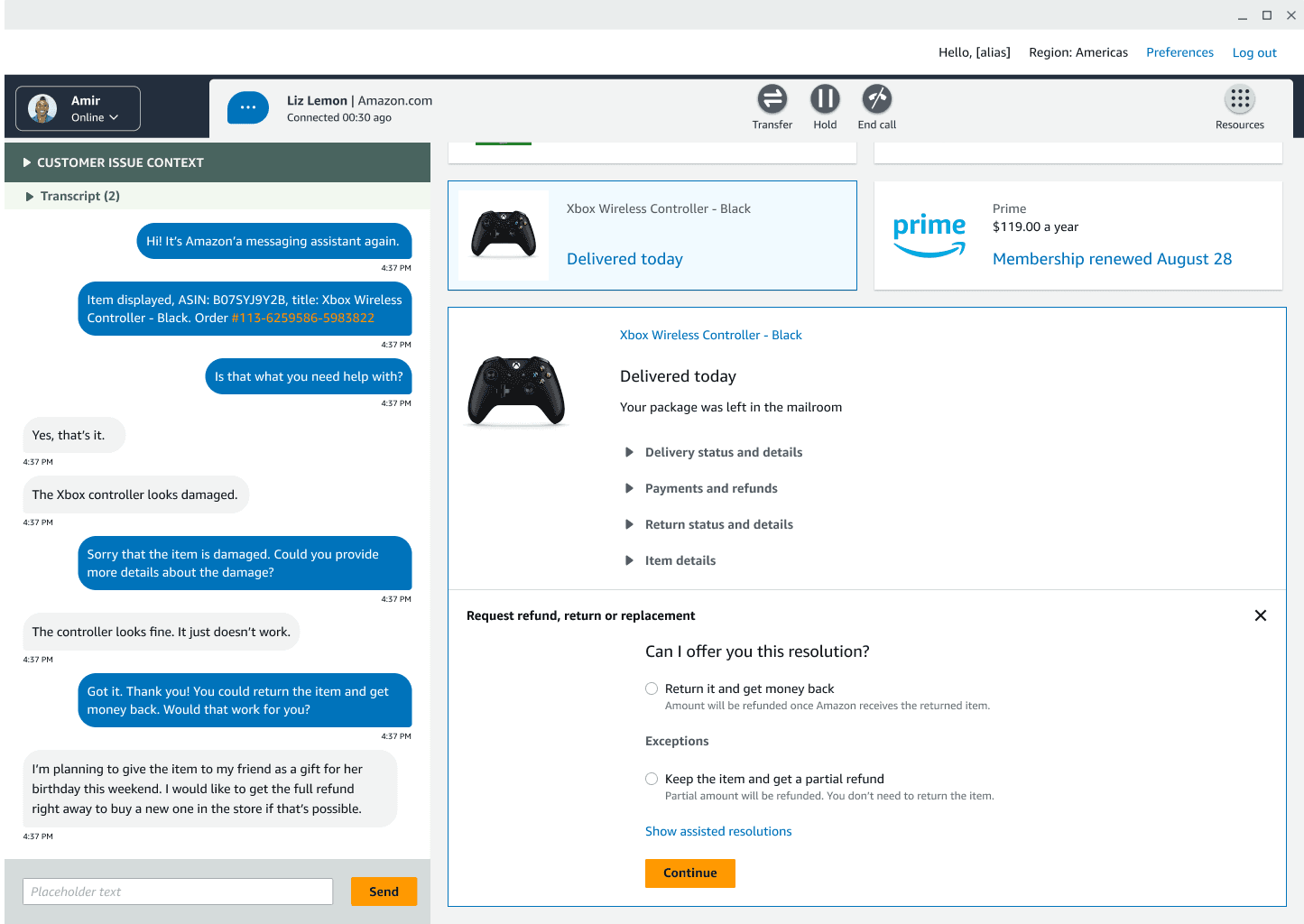
Positioning in workflow
•Expose DART resolutions as the last choice to reinforce the level of escalation
•Terminology that suggests another specialist needs to be engaged suggesting CHT increase and utilization of DART quota
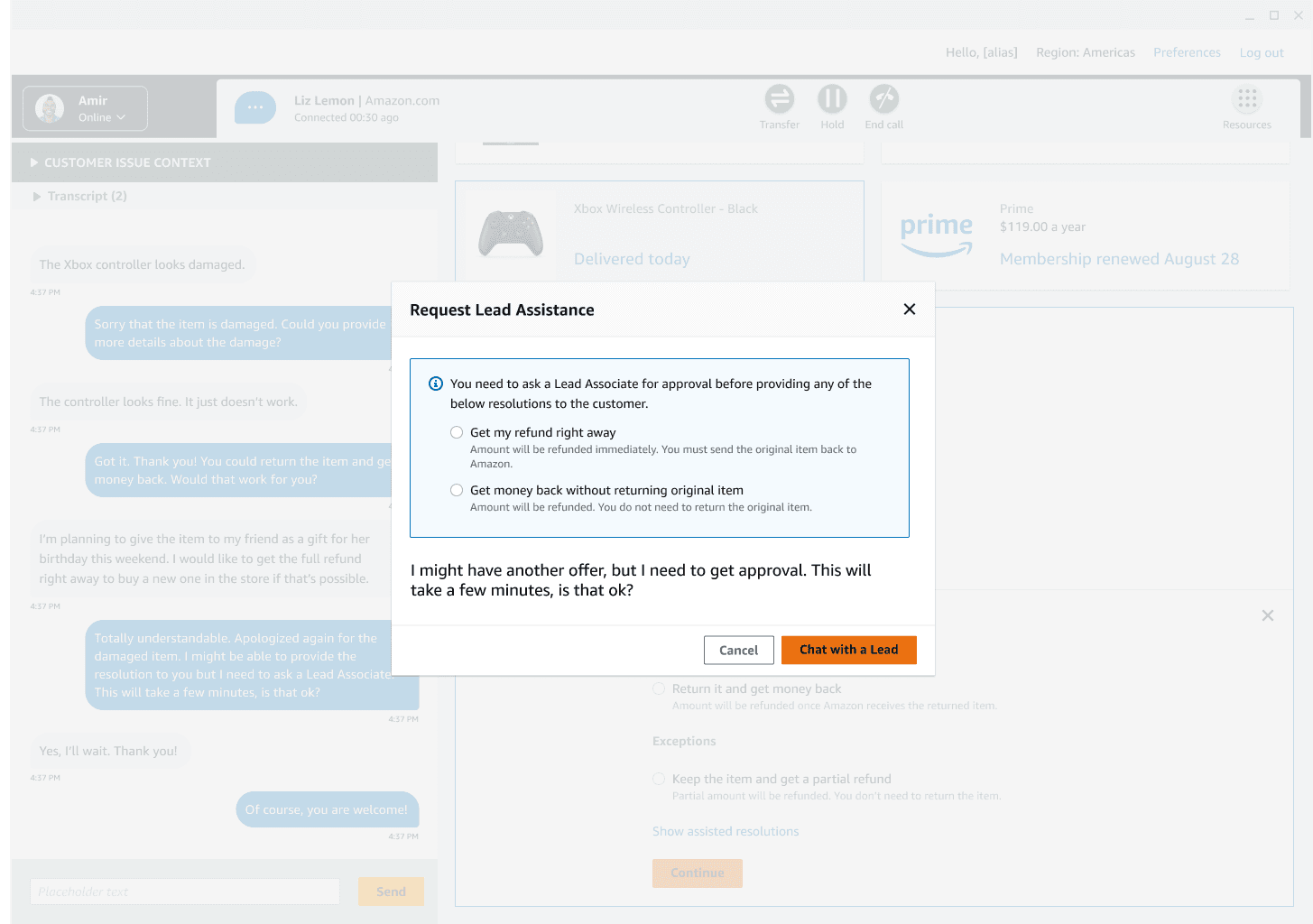
Ingress Modal
•Prompt the CSA to pause and reflect on the situation before proceeding
•Clarity on what’s for the CSA and what can be communicated to the customer
•Manage expectations for the CSA and customer
•Enabling the CSA to select the best resolution for the customer that might be available
•Consistent call-to-action that launches the DART chat pane
Communication: It's crucial to keep all group members aligned and informed. Initially, I believed that dividing tasks and having each member take responsibility for their portion would be ideal. However, after completing the paper prototype, a team member was confused about some design decisions, and missing the second usability testing delayed identifying necessary changes. If I were to do the project again, I would step out of my comfort zone, actively engage with others' work, and ask more questions to ensure clarity and collaboration.
Design: Establishing a design system is essential. We began working on Sketch without one and didn't anticipate the number of screens, leading to inconsistencies. Changes made to one screen were often not reflected on others. Learning about atomic design highlighted the importance of defining a design system upfront. In future projects, I would leverage existing systems like Material Design or Polaris or create a custom one to maintain consistency.
Prioritization: Understanding what not to do is as important as knowing what to do, especially with limited time. Our minimal viable product (MVP) didn't have all the features we envisioned, but it allowed us to iterate and plan future improvements. Focusing on core functionalities first ensures progress and provides a foundation for refinement.
Finalize an Ingress document to serve as a comprehensive reference.
Integrate Ingress patterns into the Human Interface Guidelines (HIG) to ensure consistency and alignment with design standards.
Maintain synchronization with vertical teams and establish a collaborative framework for implementing DART Ingress within their projects. This approach will streamline processes, enhance consistency, and foster effective cross-team collaboration.